Flip the Switch on Your Kitchen: How the Right Lighting Can Change Everything
There's a moment that a lot of Cincinnati homeowners describe after a kitchen renovation—not when they see the new cabinets go in, or even when the countertops get installed. It's the first evening they turn on the lights and realize the room feels completely different. Warmer. More inviting. More like theirs.
That moment almost always comes down to lighting.
For years, kitchen lighting got treated as an afterthought—one overhead fixture, maybe a fluorescent tube under the cabinets, and done. But as Cincinnati homeowners have become more intentional about how their kitchens look and function, lighting has moved from the last line item to one of the most discussed design decisions in the whole renovation. And honestly? It deserves the attention.
Why Lighting Hits Different in the Kitchen
The kitchen is the one room in your home that has to do everything. It's a workspace, a gathering spot, a dining area in many Cincinnati homes, and increasingly, a place where people want to feel relaxed and comfortable—not just productive. That's a lot to ask of a single overhead can light.
Good kitchen lighting design layers multiple light sources to serve different purposes at different times of day. A kitchen that feels crisp and functional at 7 a.m. on a Tuesday should also feel warm and atmospheric on a Saturday evening when friends are over. Achieving both takes planning—and that planning pays off in ways that are hard to overstate.
The Three Layers That Actually Matter
Designers and contractors in Cincinnati consistently talk about kitchen lighting in terms of three layers: ambient, task, and accent. Understanding how these work together is the foundation of any good lighting plan.
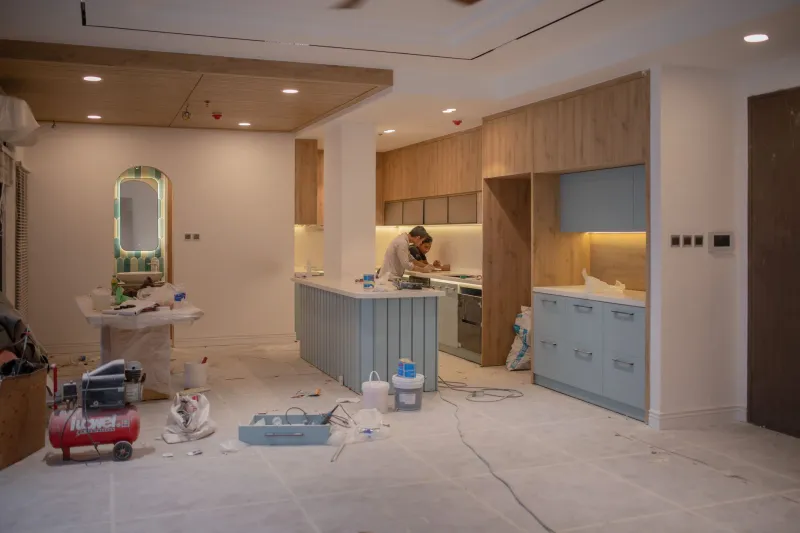
Ambient lighting is your base layer—the general illumination that fills the room. Recessed LED downlights are the most popular choice in Cincinnati renovations right now, replacing older fluorescent fixtures in kitchens across neighborhoods like Hyde Park, Oakley, and Anderson Township. A well-placed grid of dimmable recessed lights gives you flexible control over the room's overall brightness and mood.
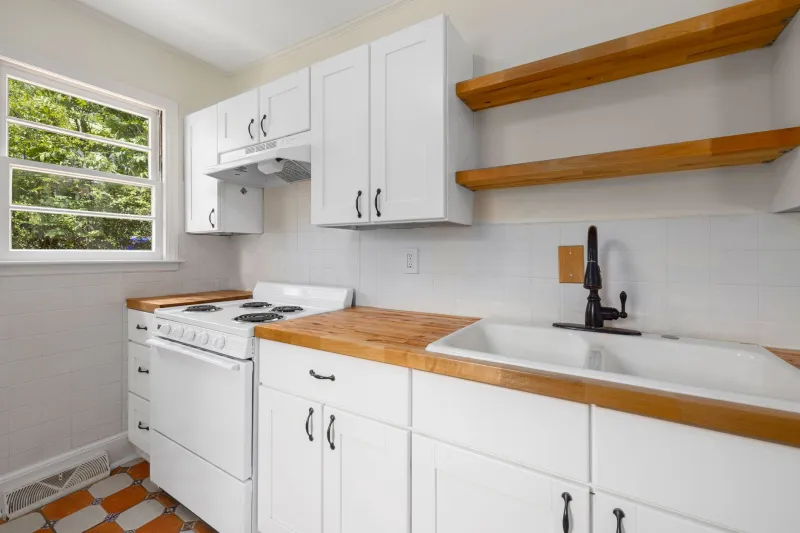
Task lighting is all about function—putting light exactly where you need it for chopping, reading recipes, and cooking. Under-cabinet LED strips are the workhorse here. They're relatively affordable, easy to install during a renovation, and make an enormous practical difference. Pendant lights over an island or peninsula also serve a task function while adding serious visual impact.
Accent lighting is the finishing touch—inside glass-front cabinets, along toe kicks, or above upper cabinets to highlight architectural details. It's not essential, but in the right kitchen, it elevates the whole space from functional to stunning.
Before and After: What a Lighting Overhaul Actually Looks Like
One of the most dramatic examples of lighting transformation we've seen in Cincinnati was a 1980s colonial in Blue Ash. The kitchen had original builder-grade lighting: a single flush-mount fixture in the center of the ceiling and one under-cabinet fluorescent strip that buzzed and flickered. The room always felt dim and a little dingy, even though the cabinets were in decent shape.
The renovation didn't touch the cabinets at all. New quartz countertops, a fresh backsplash, and—critically—a complete lighting overhaul. Six recessed dimmers were installed in the ceiling, warm-toned LED strips went under all the upper cabinets, and two matte black pendants dropped over the island. The result looked like an entirely different kitchen. Same bones, completely different feel.
That's the power of lighting done right.
Pendants: Cincinnati's Favorite Statement Piece
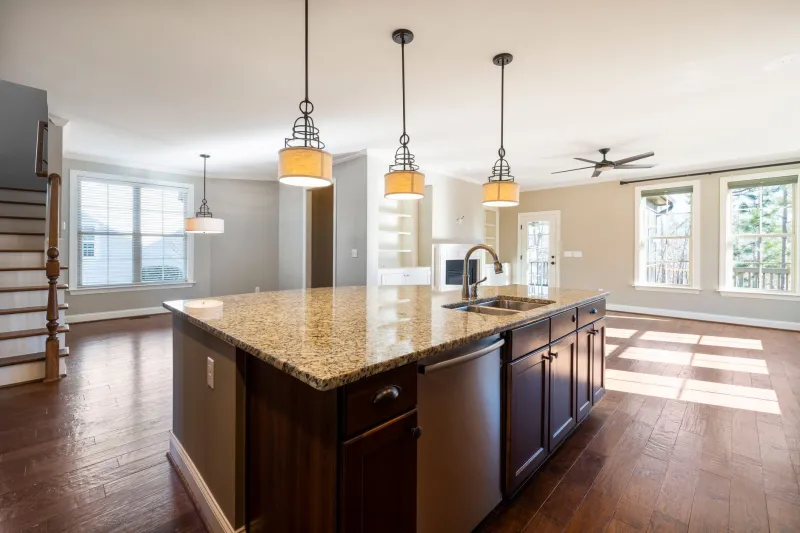
If there's one lighting element that Cincinnati homeowners are most excited about right now, it's pendant lights. Over islands, over peninsulas, even over dining areas within open-concept kitchen spaces—pendants have become the jewelry of the modern kitchen renovation.
The styles vary widely. In Cincinnati's historic neighborhoods—think Columbia-Tusculum, Clifton, or Westwood—homeowners often gravitate toward pendants that complement the character of older homes: schoolhouse-style glass globes, aged brass fixtures, or industrial-inspired metal shades. In newer builds and contemporary remodels in areas like Mason or West Chester, sleek geometric pendants and minimalist designs tend to dominate.
The key is scale. Too small and pendants look lost; too large and they overwhelm the space. As a general rule, pendants over a kitchen island should hang 30–36 inches above the countertop surface and be spaced roughly 24–30 inches apart for a balanced look.
Dimmers Are Non-Negotiable
If there's one piece of advice that nearly every Cincinnati lighting designer and kitchen contractor gives without hesitation, it's this: put everything on a dimmer.
Dimmable lighting gives you complete control over the mood of your kitchen at any moment. Full brightness for cooking prep. Softer light for a casual dinner. Low, warm ambiance when the kids are doing homework and you're finishing a glass of wine. Without dimmers, you're stuck with one setting, and that setting is almost never perfect for every occasion.
Modern LED dimmers are inexpensive and easy to install during a renovation. There's genuinely no good reason not to include them.
Color Temperature: The Detail Most Homeowners Miss
Here's something that doesn't get talked about enough: the color temperature of your bulbs matters just as much as the fixtures themselves. Measured in Kelvins, color temperature ranges from warm (around 2700K, which looks yellowish and cozy) to cool (5000K and above, which looks bright and clinical).
For kitchens, most designers in Cincinnati recommend staying in the 2700K–3000K range for ambient and accent lighting—warm enough to feel inviting, but not so yellow that it distorts the colors of your food or finishes. Task lighting under cabinets can go slightly cooler (3000K–3500K) to improve visibility without disrupting the room's overall warmth.
Mixing wildly different color temperatures in the same kitchen is one of the most common mistakes homeowners make—and one of the easiest to avoid by simply being intentional at the planning stage.
Planning Your Kitchen Lighting Layout
The best time to think about lighting is before your walls close up during a renovation—not after. Here are a few practical steps to take early in the process:
- Work with your contractor to map out your lighting zones before any electrical rough-in happens. Know where your island, prep areas, and sink are located, and plan task lighting accordingly.
- Decide on fixture styles before you finalize your overall design palette. Pendants, cabinet hardware, and faucets should all feel like they belong to the same design family.
- Budget for quality LED fixtures. In a well-designed kitchen, you're not replacing bulbs every year—invest in fixtures rated for long-term use.
- Don't forget the sink. It's one of the most-used task areas in any kitchen and is frequently under-lit. A recessed light or small pendant directly above the sink makes a noticeable difference.
The Investment Is Smaller Than You Think
One of the most appealing things about prioritizing lighting in a kitchen renovation is the value it delivers relative to its cost. A thoughtful lighting plan—recessed fixtures, under-cabinet strips, a couple of statement pendants, and dimmer switches—might add $1,500 to $4,000 to a renovation budget depending on complexity. For the visual and functional return, that's one of the best dollars-per-impact investments in the whole project.
For Cincinnati homeowners who want their renovated kitchen to feel genuinely transformed—not just updated—lighting is where that transformation often lives.