Groovy Without the Guilt: How Cincinnati Homeowners Are Pulling Off Retro Kitchens That Actually Work
There's a reason so many Cincinnati homeowners are suddenly reaching back in time for kitchen inspiration. Maybe it's a reaction to years of ultra-minimalist all-white everything. Maybe it's the Instagram effect, where a perfectly placed checkerboard floor gets a thousand saves overnight. Whatever's driving it, nostalgic kitchen design is genuinely trending here in the Queen City — and when it's done right, it looks absolutely stunning.
The tricky part? "Done right" is doing a lot of heavy lifting in that sentence.
Go too far in the retro direction and you end up with something that feels less like a design choice and more like a renovation your neighbor did in 1978 and just never got around to updating. Go too conservative and the vintage touches disappear entirely, leaving you with a kitchen that's neither here nor there.
So how are local homeowners threading that needle? We looked at several Cincinnati renovation projects — from Oakley bungalows to Hyde Park colonials — and talked to designers and contractors about what separates a kitchen that feels intentionally retro from one that just looks old.
The Before: When "Vintage" Was Just "Neglected"
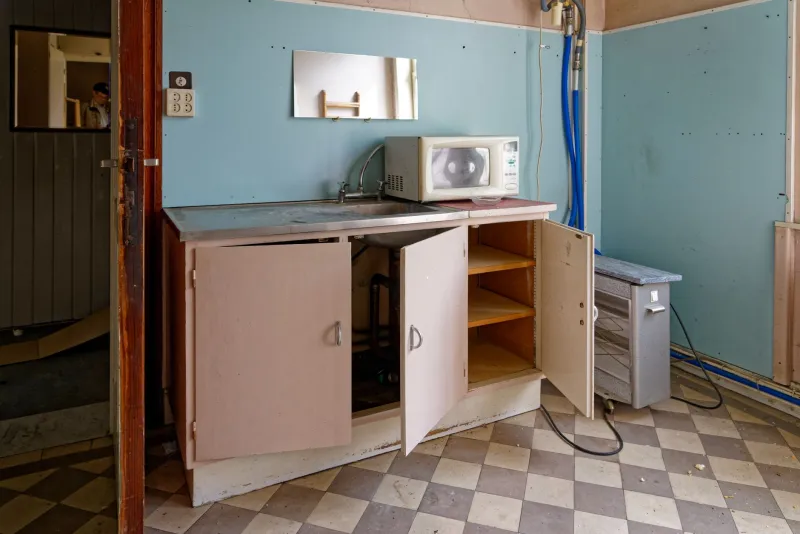
One of the most telling examples came out of a Norwood split-level whose kitchen hadn't been touched since the mid-1980s. The original laminate countertops were peeling at the seams, the linoleum floor had worn through in front of the sink, and the cabinets — a sort of sad, oxidized oak — were held together more by habit than by hardware.
The homeowners, a couple in their early 40s, initially considered a full gut renovation. But when they started pulling reference images, a pattern emerged: everything they loved had a warm, slightly old-fashioned quality to it. Deep green cabinetry. Unlacquered brass fixtures. Subway tile with dark grout. They weren't running from the past — they were just trying to get to a better version of it.
Their contractor helped them make a crucial distinction: they weren't restoring the kitchen, they were referencing a different era with modern materials and modern functionality underneath. That framing changed everything.
What Actually Works: The Retro Elements Worth Stealing
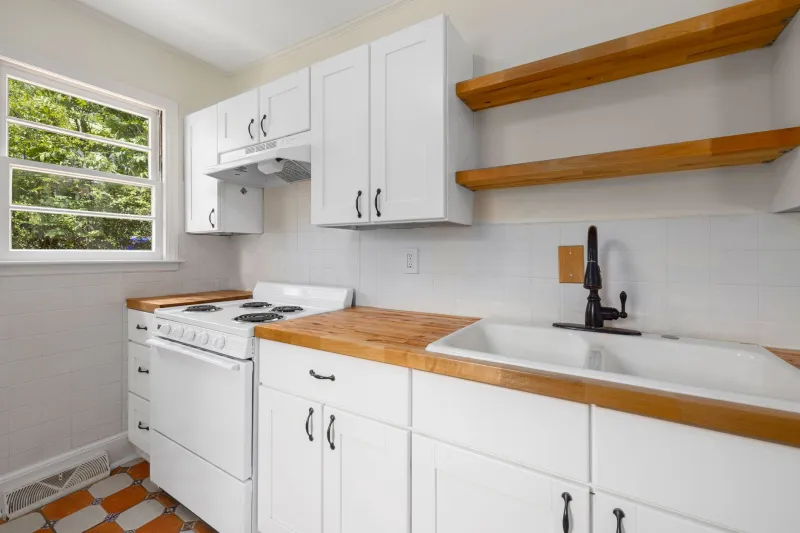
Warm wood tones are back, and they're better than ever. The honey-oak cabinets of the '90s gave wood a bad reputation it didn't entirely deserve. What's working now in Cincinnati kitchens is something richer — think walnut-stained lower cabinets, butcher block islands, or even just open shelving in a warm natural finish. Paired with contemporary hardware and a clean countertop edge, these elements read as deliberate and sophisticated rather than dated.
Vintage tile patterns are having an absolute moment. Encaustic cement tiles, checkerboard floors, and hand-painted Talavera-style backsplash tiles are showing up everywhere from Clifton to Indian Hill. The key is restraint. A checkerboard floor in black and white is timeless. Checkerboard floors plus a busy backsplash plus patterned cabinet fronts is just chaos. Pick one bold pattern and let everything else breathe around it.
Color is back at the table. After years of greige domination, Cincinnati designers are seeing a surge in clients who want actual, committed color in their kitchens. Sage green, deep navy, warm terracotta, and even the occasional mustard yellow are all making appearances. These palettes are inspired by mid-century and late-century design, but they don't feel costume-y because they're being applied to clean-lined contemporary cabinetry rather than the ornate raised-panel styles of the original eras.
Retro hardware is one of the easiest wins. Swapping out brushed nickel pulls for unlacquered brass, oil-rubbed bronze, or even vintage-style cup pulls is a low-cost, high-impact move. This is one of the few areas where you can go full retro without worrying much about function — a beautiful drawer pull is a beautiful drawer pull, regardless of the decade it's nodding to.
What to Skip: The Retro Moves That Don't Age Well
Not every vintage trend deserves a revival. A few things that look appealing in inspiration photos tend to create real headaches in actual Cincinnati kitchens:
Faux-aged or distressed finishes on cabinets can be gorgeous in the right context, but they show wear unevenly over time and are notoriously difficult to touch up. Several local contractors mentioned being called in to refinish distressed cabinets that had started looking genuinely damaged rather than charmingly worn within just a few years.
Purely decorative open shelving is a staple of vintage-inspired kitchen photography, but it requires an almost religious commitment to organization. In real-life Cincinnati kitchens — especially those with kids, pets, or just normal human entropy — open shelves accumulate grease, dust, and clutter faster than almost any other surface. If you love the look, consider limiting open shelving to one or two intentional display areas rather than replacing all your upper cabinets.
Low-contrast color schemes that mimic faded vintage palettes can look washed out in real life, especially in Cincinnati's famously gray winters when natural light is at a premium. What reads as "soft and nostalgic" in a sun-drenched Instagram photo can look dingy and flat in a north-facing kitchen in February.
The After: Intentional Nostalgia in Action
Back in Norwood, the finished kitchen is a genuinely impressive example of what this approach can look like when it clicks. The lower cabinets are painted a deep forest green — a color the homeowners pulled from a vintage seed catalog print they'd had framed in their living room for years. The upper cabinets are a creamy white with simple shaker-style fronts, keeping the upper half of the kitchen light and airy. The floor is a classic black-and-white hexagon tile that would have looked perfectly at home in a 1940s Cincinnati bungalow.
But the countertops are honed quartzite. The appliances are stainless steel with modern smart features. The under-cabinet lighting is LED. The range hood is sleek and powerful. The kitchen looks like it has history, but it functions like the 2020s — which is exactly the point.
Finding Your Era
One thing Cincinnati designers emphasize is that "retro" isn't a single aesthetic. There's a big difference between a kitchen inspired by the 1920s craftsman era, the 1950s diner look, the earthy 1970s palette, and the bold graphic patterns of the 1980s. Each requires a different approach and pairs better with different home styles.
If you're in an older Cincinnati neighborhood — Westwood, Madisonville, Mount Lookout — your home's original architecture can actually be a guide. A craftsman bungalow has built-in permission for warm wood tones and period-appropriate tile. A mid-century ranch in Green Township is a natural canvas for the clean lines and warm colors of 1950s and '60s design.
The goal isn't to freeze your kitchen in amber. It's to use the past as a reference point — a source of warmth, character, and a little personality — while still building something that works beautifully for the way you actually live today.